ICCE 2026 Workshop

The 3rd International Workshop on Large Language Models for Education (LLM4Edu)

This workshop provides an open forum for researchers, practitioners, and developers to share empirical studies, innovative applications, and theoretical reflections on LLM-based educational tools and agents.

Workshop Topic

As a significant breakthrough, large language models (LLMs) and agents are increasingly permeating educational landscapes and revolutionizing teaching and learning. LLMs possess robust semantic comprehension and text generation capabilities that surpass traditional natural language processing methods, and they furnish more precise and personalized teaching and learning support through deep learning from vast data sets.

Applications based on LLMs and agents can provide students with abundant learning resources and diverse learning scaffoldings to guide them in problem-solving. LLMs can also be utilized for automated teaching diagnosis, mitigating teachers' workload while enabling them to grasp learning situations efficiently, adjust teaching strategies, and devise more effective teaching evaluation methods.

Building on the success of the previous LLM-Edu workshops at GCCCE 2024 and ICCE 2025, the 3rd edition will be held at ICCE 2026.

Workshop Chair

Dr. Bo Jiang

East China Normal University, China | bjiang@deit.ecnu.edu.cn

Dr. Jiang Bo is a Professor at East China Normal University (ECNU). He serves as Deputy Dean of the Shanghai Institute of Intelligent Education, and PI of the ECNU National Base for Intelligent Social Governance (Education). His research interests focus on Eduactional agent design, explainable learner model and AI literacy education. Dr. Jiang has led and participated in over ten national and provincial research projects, and has published more than 50 papers in SCI, SSCI, CSSCI journals and CCF-A conferences. He served as Editorial Board Member for multiple international SCI/SSCI journals, Executive Committee Member of the Asia-Pacific Society for Computers in Education (APSCE), and IPC Chair of GCCCE 2023 and ICCE 2025.
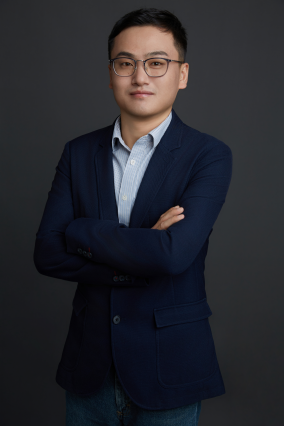

Professor Bo Jiang

Workshop Co-Chairs

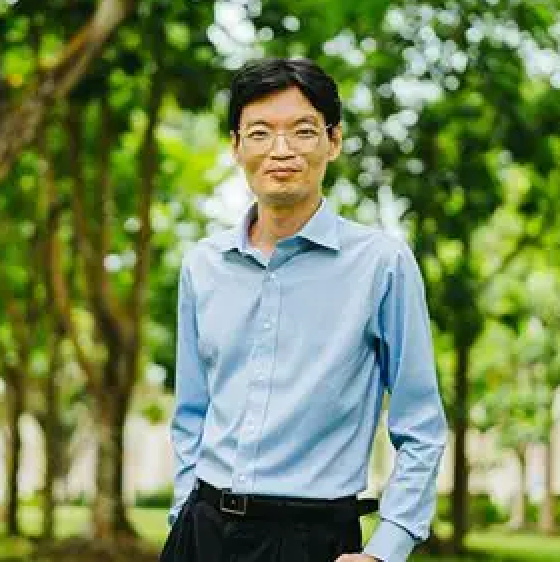
Professor John Stamper

Dr. John Stamper

Carnegie Mellon University, United States

John Stamper is an Associate Professor at the Human-Computer Interaction institute at Carnegie Mellon University. He is also the Technical Director of the Pittsburgh Science of Learning Center DataShop. His primary areas of research include Educational Data Mining and Intelligent Tutoring Systems. As Technical Director, John oversees the DataShop, which is the largest open data repository of transactional educational data and a set of associated visualization and analysis tools for researchers in the learning sciences. John received his PhD in Information Technology from the University of North Carolina at Charlotte, holds an MBA from the University of Cincinnati, and a BS in Systems Analysis from Miami University. Prior to returning to academia, John spent over ten years in the software industry including working with several start-ups.

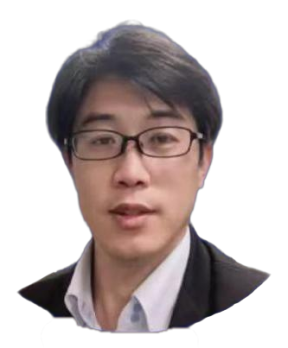
Professor Hung-Hsiang Wong

Dr. Hung-Hsiang Wong

Nanyang Technological University, Singapore

Dr Wong Lung Hsiang is a Senior Education Research Scientist at the Centre for Research in Pedagogy and Practice, National Institute of Education, Nanyang Technological University (NTU). He also serves as an Adjunct Professor at Universitas Negeri Malang, Indonesia. He earned his Ph.D. in 1998 from NTU, specialising in computer engineering with a focus on artificial intelligence in education, particularly intelligent tutoring systems based on the inquiry teaching model.Dr. Wong is active in various international academic organisations. He is a former president of the Asia-Pacific Society on Computers in Education (APSCE) (2018-2019), an Executive Committee member of the Global Chinese Society for Computers in Education, a former Board Member of the International Alliance of Advancing Learning in the Digital Era (IAALDE) (2019-2024), and former Singapore representative of Technical Committee 3 (e-Learning), International Federation on Information Processing, UNESCO.

Professor Chengjiu Yin

Dr. Chengjiu Yin

Kyushu University, Japan

Professor Chengjiu Yin is a Professor at Kyushu University, Japan. He has over 20 years of experience in educational technology research and practice. His primary research objective is to explore the nature of intelligent information environments that facilitate knowledge transmission, awareness, and creation. To achieve this goal, he has conducted extensive research on educational and learning support using information and communication technologies (ICT). He has led numerous research projects and published extensively in the fields of educational technology, artificial intelligence in education, learning analytics, and AI-supported learning. His work emphasizes both the development of innovative learning technologies and their implementation in authentic educational settings.

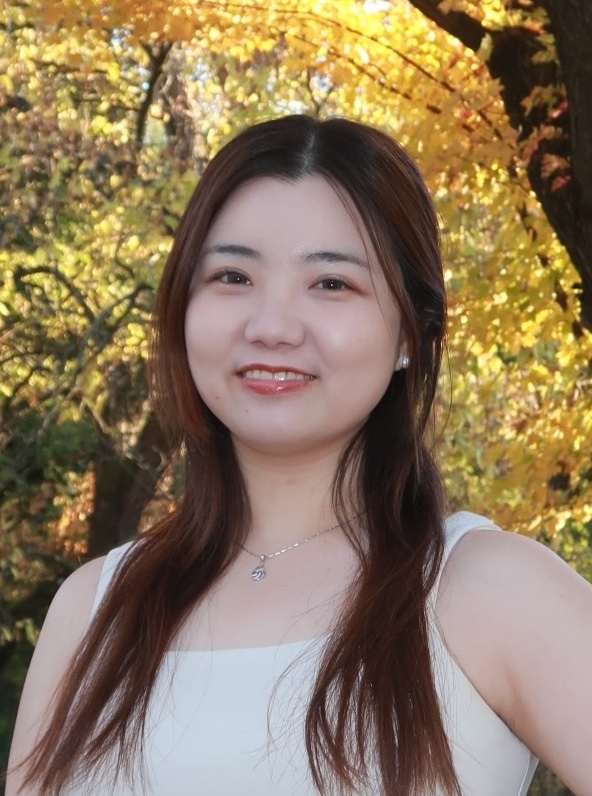
Ms. Kexin Yang

Dr. Kexin Yang

Carnegie Mellon University, United States

Kexin Yang received her Ph.D. in Human–Computer Interaction from the Human-Computer Interaction Institute, Carnegie Mellon University, USA.Her research focuses on Human–AI Collaboration, Artificial Intelligence in Education (AIED), Multimodal Learning Analytics (MMLA), and the design of intelligent learning environments supported by large language models (LLMs). She investigates how AI can be leveraged to support teaching and learning through human-centered design, classroom orchestration, and educational data science. Her work has been published in leading venues including CHI, CSCW, AIED, EDM, EC-TEL, and the Journal of Computer Assisted Learning. She has received several research awards, including the Best Student Paper Award at EDM and the Best Design Paper Award at ICLS.

Ms. Jiatong Wang

Ms. Jiatong Wang

East China Normal University, China

Jiatong Wang is a Ph.D. at the Shanghai Institute of Artificial Intelligence for Education, East China Normal University, China. Her research focuses on Human-AI Collaboration, Artificial Intelligence in Education (AIED), and Learning Analytics. Her work explores the mechanisms through which humans and AI collaborate to improve learning outcomes and problem-solving performance. Her research has been presented at leading international conferences, including CHI and ICCE, and her work has been published in journals such as Interactive Learning Environments.

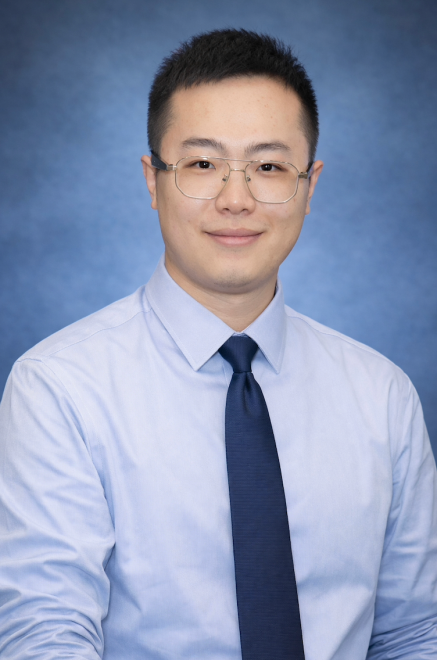
Mr. Yuan-Hao Jiang

Mr. Yuan-Hao Jiang

East China Normal University, China

Yuan-Hao Jiang is currently a Ph.D. candidate at the Shanghai Institute of Artificial Intelligence for Education, East China Normal University. He is currently visiting the National Institute of Education, Nanyang Technological University. Prior to this, he participated in an inter-university joint doctoral student program at Shanghai Jiao Tong University. He has led several research projects, including projects funded by the Fundamental Research Funds for the Central Universities. He has served as a Program Committee member for tracks or workshops at conferences such as AIED, ICCE, and GCCCE. His honors include Outstanding Trainee of Shanghai Innovation Institute, CNKI Highly Cited Paper Author, and the National Scholarship. His research interests include AI for Education, large language models, and human-computer interaction.